4. Blessed Raymond du Puy,
author of the monastic rule
Grandmaster from 1120 to 1158
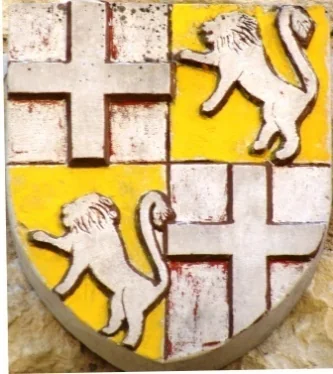


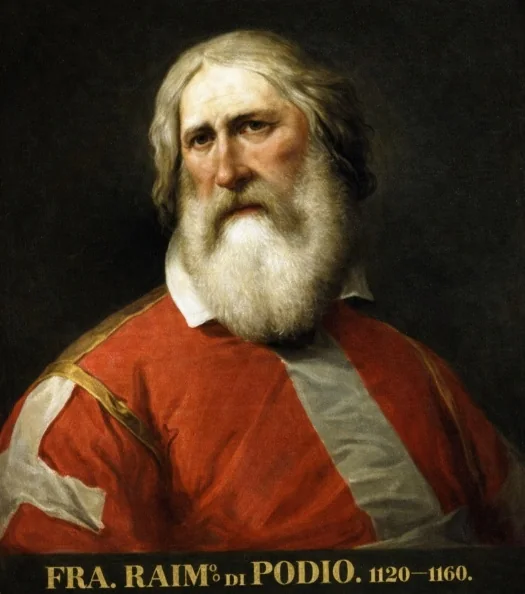

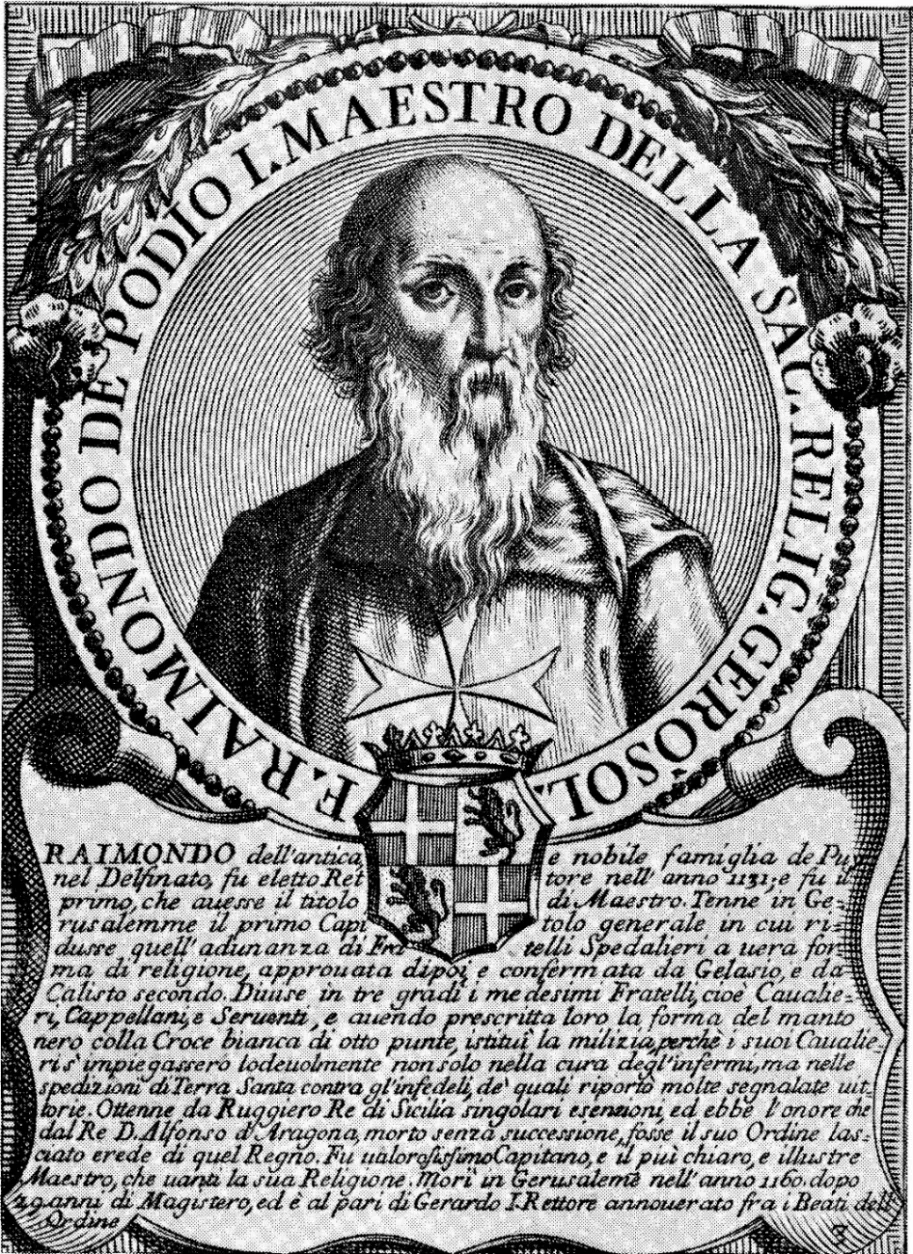
Translation: “RAIMUND DE PUY,
FIRST GRANDMASTER OF THE HOLY ORDER OF JERUSALEM
Raymond, from the ancient and noble Puy family of the Dauphiné, was elected rector and first master in 1131162. He was the first to hold a general chapter in Jerusalem, where he formalized the assembly of the Hospitaller Brothers into a truly religious order, later confirmed by Gelasius and Callixtus II. He divided the brothers into three classes: knights, chaplains, and servants. After prescribing the form of their mantle, which was black with a white eight-pointed cross, he established the militia so that his knights would not only commendably care for the sick but also participate in expeditions to the Holy Land against the infidels, winning many notable victories. He received special privileges from King Roger of Sicily and had the honour of having his order bequeathed to him by King Alfonso of Aragon, who died without an heir, as his inheritance from that kingdom. He was a very brave captain and the clearest and most famous master his order ever had. He died in Jerusalem in 1160 after 29 years as master and is counted among the blessed of the order, alongside Gérard the Rector.
In 1120, the Order of St. John elected Raymond of Puy (Raimundus Puteanus) as the successor to Blessed Gérard.
Raymond's lasting achievement is the codification of the Order's rule, which serves as the primary source for this study. Under his leadership, the Order of St. John was transformed into a military order, modelled on the Knights Templar. Thus, it assumed military duties in addition to its charitable work. This is not surprising, as many knights were already members of the Order. Ensuring the safety of pilgrims on their journeys to and from Jerusalem and in the hospitals was a natural consequence of their goal of providing comprehensive care for their lords in every respect.
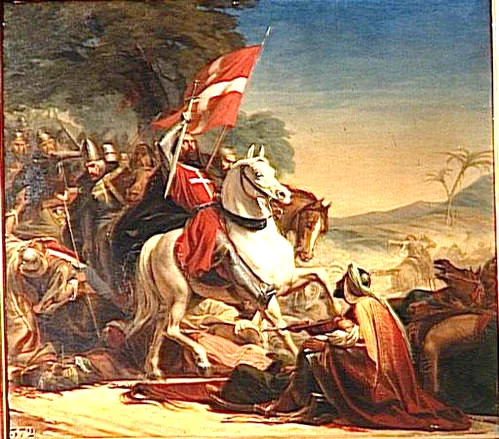
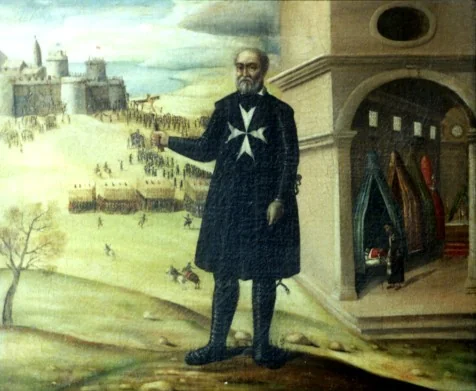
Defence of Coele-Syria by Raymond du Puy,
painting by Édouard Cibot (1799–1877), 1844, commissioned by Louis-Philippe for the Historical Museum of Versailles163
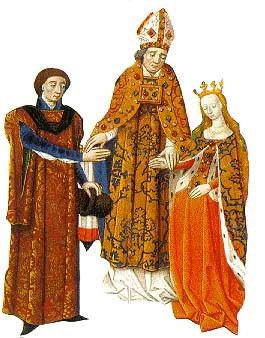
The King of Jerusalem, Fulk V of Anjou
(the picture shows him at his wedding to Queen Melisende on June 2, 1129164),
with the defense of the city of Beersheba in
1131 165.
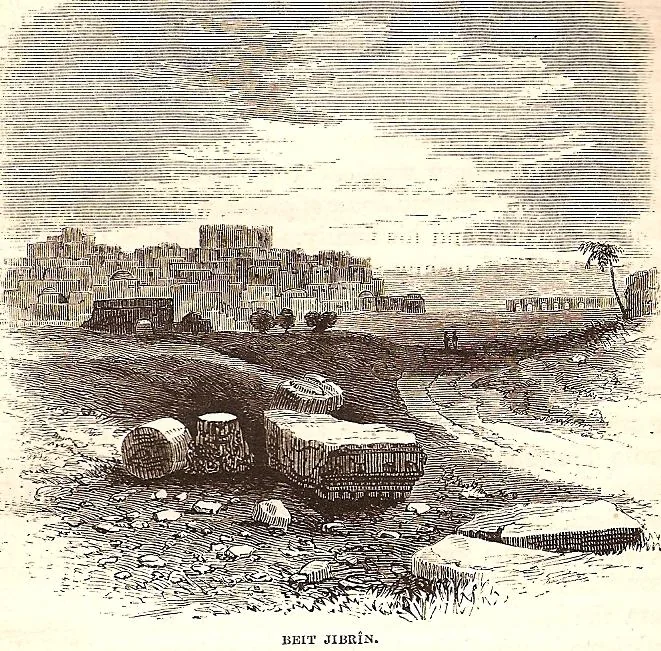
with the border castle
Beit Gibelin166
(today: Beit Guvrin / Bayt Jibrin) in 1136
 167
167
 168
168
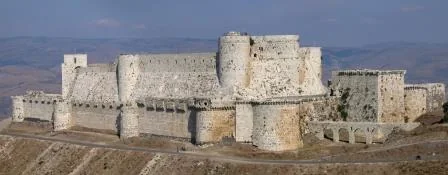
and the castle Krak des Chevaliers in 1142.
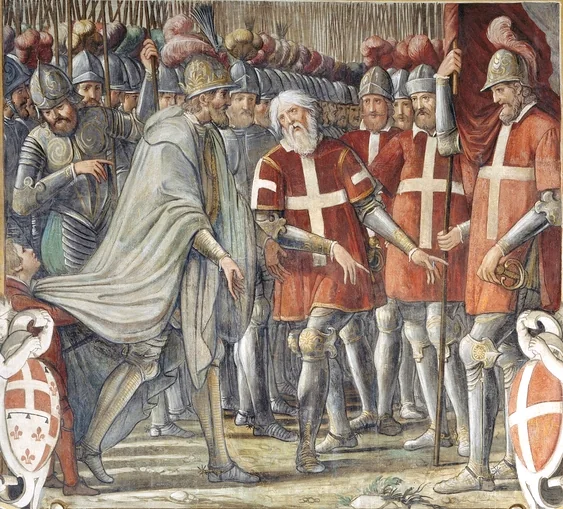
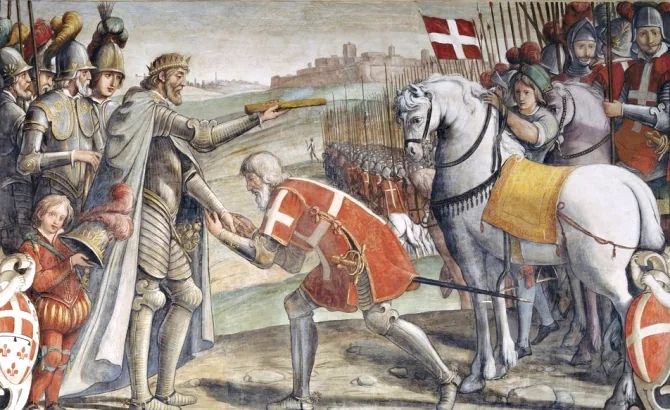
Raymond du Puy offers his services to King Baldwin II of Jerusalem.
(Fresco in the Grandmaster's Palace in Valletta)169
 The image shows a copper engraving by Raimund (Raymundus)
of the Order of St. John.
Identity: The Latin inscription in the upper left identifies him as "Raymundus ordinis Iohanitarum Magister electus" (Raimundus, elected Master of the Order of St. John). The signature in the lower right is "Iohanser Naister," a historical spelling of Johannes Naister , which also points to the Order of St. John.
Historical context: The accompanying text describes the regulations and military attire of the Order under King Baldwin (presumably Baldwin II of Jerusalem). It mentions that the knights vowed to defend the Holy Land and Christians against infidels with arms.
Clothing of the Order: The description in the text states that the knights wore military red clothing with a white cross over it. In war, they wore a red vest with a white cross.
Order's habit: On the sleeve of the man depicted in the engraving is an octagonal white cross (the Maltese cross) on a dark background, which corresponds to the description in the text.170
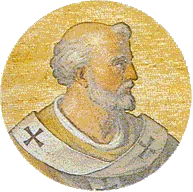 Image171 Image171 |
The dual role of the Order of St. John as a knightly and hospitaller order is first documented in a papal appeal for donations dated February 20, 1131, the circular letter . “Quam amabilis Deo”172 by Pope Innocent II (1130 – 1143): |
|---|---|
To Bishop Innocent, the venerable brothers, the archbishops, bishops (etc.) Greetings and apostolic blessing. How pleasing and highly esteemed the Hospital of Jerusalem (Xenodochium) is, what pleasant and valuable accommodation it offers poor pilgrims, has been amply experienced by those who, driven by inner piety and facing dangers at sea and on land, visit the holy city of Jerusalem and the Lord's tomb. There (in the Hospital of Jerusalem) the poor and destitute are restored to strength, countless acts of charity are performed for the sick, and those weakened by manifold hardships and dangers regain their former vigour. And so that they themselves may travel to the places sanctified by the earthly life of our Lord Jesus Christ, the brothers of this house, ever ready to lay down their lives for their brothers (the pilgrims) , undertake to protect the pilgrims from attacks by unbelievers, both on their way there and on their return, with the squires and mounts specially chosen and maintained for this purpose. These are the people through whom God cleanses the Eastern Church of the defilement of unbelievers and combats the enemies of the Christian name. And since their own resources are insufficient for such a pious and God-pleasing work, we appeal to your charity through this bull, that you may use your abundance to alleviate their need and earnestly exhort the flock entrusted to you to join their fraternity and to organize collections for the support of pilgrims and the needy, thereby also obtaining the forgiveness of sins. You should know that we have placed this house of hospitality, with all its appurtenances, under the protection of St. Peter and Our Lord, and have issued him a written testament to this. Therefore, whoever, from the wealth bestowed upon him by God, assists these brothers and enters their fraternity as a member , and also pays them a certain amount annually, to him we grant, from the treasury of grace of the Apostles Peter and Paul, a one-week indulgence. By virtue of our apostolic authority, we further decree, out of deep respect for this venerable house, that those who have accepted its fraternity, should the churches to which they belong be under interdict at the time of their death, shall enjoy a church burial, provided that they are not themselves excommunicated and personally excommunicated. Furthermore, members of the fraternity whom the prelates refuse to permit burial at their churches shall, if they are not personally excommunicated, be allowed to offer gifts at the graves of the deceased without any objection, just as those offered for others buried there. Moreover, those who admit new members into the fraternity and collect the offerings shall be placed under the special protection of St. Peter and Our Lord, irrespective of the rights of their superiors. When the brothers entrusted with this collection arrive in any town, castle, or village, perhaps under interdict, the churches are to be opened once a year to celebrate their joyful arrival, and divine service is to be celebrated with the exclusion of the excommunicated. To increase their merit, we command you to communicate this statute to your parishioners by special letter; we also decree that if some of your clergy wish to serve the brothers of the aforementioned hospital voluntarily and without compensation for one or two years, with the permission of their spiritual superior, they shall not be prevented from doing so, nor shall they forfeit their benefices and incomes. Given at Chalons on February 20, in the eighth indiction, in the first year of the pontificate of Pope Innocent II |
|
The Pope's call to join the fraternity/confraternity does not refer to the Order itself or the Confraternity of St. John, from which the Order originated, but to a new institute, similar to the contemporary Third Order of St. Francis or the Benedictine Oblates. This fraternity is a community of all who wish to support the Order through prayers and financial donations, essentially as supporting members. Shortly after his election as Grandmaster, Raymond du Puy wrote about this fraternity around 1121:
" To all archbishops, bishops, abbots, priors, counts and all the faithful, both present and future: Raymond, the servant of the poor of Christ, sends greetings."
Since I was appointed a Servant of the Poor of Christ after the death of Mr. Gérard, I earnestly beg your love that you do not diminish your alms and support for this holy hospital in Jerusalem but rather increase them. We do this so that you may share in the blessings and prayers offered in Jerusalem for all Christendom.
For those who have joined our brotherhood, or who will join it in the future, should be as assured of God's mercy as if they themselves had fought in Jerusalem. They will receive the crown of righteousness .173
Pope Innocent II confirmed in 1135
the privileges granted to the Order by his predecessors174:
| Innocent II (etc.) (wishes) his beloved son Raymund in Christ, at the Pilgrim House in Jerusalem, and his successors, who will be appointed according to canon law, (salvation) forever. We confess that by the Lord's providence we have been appointed to the service of the Holy See, that we should effectively support His sons when they implore help, and protect the holy places as the Lord has given them. Therefore, beloved son in the Lord, Provost Raymund, inspired by your pious zeal for the hospitals, we accept your request with due benevolence and place the Pilgrim House, which was established by your predecessors in the city of Jerusalem next to the Church of Blessed John the Baptist, under the secure protection of the Apostolic See, following the example of our predecessors of holy memory, the Roman Popes Paschal, Calixtus, and Honorius. We decree that everything acquired for the needs of pilgrims and the poor in the parishes of the Church of Jerusalem, as well as in those of other churches and in the prayer houses of the communities, through the diligent efforts of your predecessor, of blessed memory Gérard, and your own, for this pilgrim house, or donated by any faithful men, everything that may be donated or acquired in the future, God willing, and everything that has been ceded by the venerable brothers of the See of Jerusalem, shall remain untouched and fully preserved, both for you, beloved son, Provost Raymund, and for your successors and for the brothers who care for the pilgrims there. We also decree that the donations granted to this pilgrim house by the pious princes from tithes and taxes shall be considered legally valid. We also confirm the pilgrim houses and alms-houses in the West, near the castle of Saint Giles, at Asti, Pisa, Bari, Otranto, Tarentum, and Messina, which are renowned under the name of Jerusalem; furthermore, all the honours and possessions that your Pilgrim House already possesses on both sides of the sea in Asia or in Europe, or that it may acquire in the future with the Lord's help, to you and your successors who distinguish themselves in their efforts on behalf of the hospitals, and through you to this Pilgrim House for all time; and we decree that all this shall remain under the protection and authority of the Roman See. Moreover, we ordain that you may retain and possess for your Pilgrim House the tenth of your fruits, wherever you collect them from your revenues, without objection from bishops or episcopal officials. We establish that no bishop may pronounce the penalty of interdict or excommunication in the churches under your jurisdiction. However, if a general interdict has been proclaimed in a city or other place, you shall be permitted to celebrate the divine mysteries, albeit with the laity excluded, with the doors locked, and without the ringing of bells . After your death, you who are now provost of this place, or after the death of any of your successors, no one shall become its head through trickery or force, only the one whom the brothers have designated for election according to God's will. Therefore, we decree that no one shall be permitted to simply disturb this pilgrim house, steal its possessions, withhold stolen possessions, threaten it, or harass it with reckless disturbances, but that everything shall remain untouched by him for whose preservation and management it is intended, in every respect, for all time. If any cleric or layman should dare, knowing this document and our decree, to act against it, he shall be admonished two or three times. If he does not amend his guilt to a satisfactory degree, he shall forfeit the dignity of his office and his honour and acknowledge that, according to divine judgment, he is guilty of a crime. He shall be kept away from the most holy flesh and blood of God and our Lord Jesus Christ and subjected to a final, severe punishment. With all who uphold their rights in this place, may the peace of our Lord Jesus Christ be, that they may receive here below the fruit of their good deeds and find with the stern Judge the reward of eternal peace. Amen, amen, amen... |
|---|
On February 7, 1137,
Innocent II confirmed the hospital master Raymond in his duties,
placed the order under his protection and granted it further privileges175:
Innocent II (etc.) wishes eternal salvation to his beloved son Raymund, master of the pilgrims' house in the holy city of Jerusalem, and to his brothers, both present and future. The religion of the Christian faith piously believes and truly professes that our Lord and Savior Jesus Christ, although rich in all things, became poor for our sake. Therefore, he also promises those who emulate him the reward of corresponding comfort. 'Blessed,' he says, 'are you who are poor, for yours is the kingdom of heaven.' And this same father of orphans and refuge of the poor speaks in the Gospel, in which he exhorts us to hospitality and good works: 'Whatever you did for one of the least of these brothers and sisters of mine, you did for me.' He also assured us, in order to show the extraordinary goodness of such humanity, that he himself would pay the price for a cup of cold water. And we, to whom it is due by virtue of our office to care with fatherly love for those near and far, regard your sacrifice with due benevolence and, as you request, place the hospital of the holy city of Jerusalem under the protection of St. Peter and secure the persons and property belonging to it by the privilege of the Apostolic See. We decree that all possessions, all goods which this place currently possesses according to secular and canon law, or which may in the future be acquired by donation of popes, generosity of kings and princes, sacrifices of the faithful, or in any other lawful way, God willing, shall be secure and remain undiminished for all eternity. The following provision stipulates that those who support the hospital will receive the remission of one-seventh of their sins. In the event of an interdict, hospitals have the right to a church burial. They may open interdicted churches once a year, hold services there, and collect donations. |
|---|
Around 1140, Pope Innocent II called upon the whole Church to assist the Order with its responsibilities176.
Innocent II (etc.) wishes the venerable brothers, the archbishops, bishops, abbots, and all the heads of the churches to whom this document has been delivered, good health... (etc.). Those who, spurred on by pious devotion and amidst manifold dangers by land and sea, visit the Holy City of Jerusalem and the Lord's Tomb, continually recognize how pleasing to God and worthy of veneration to humankind, what a pleasant and useful lodging the Pilgrim House of Jerusalem is to pilgrims and the poor. For there the needy and the poor are cared for, the sick are shown the services of humanity in manifold ways, and those weary from various hardships and dangers are strengthened to the best of one's ability. There, the servants whom the brothers of the house have specifically assigned for this purpose and, when expediency requires, maintain at their own expense, piously and diligently ensure that those who travel to the holy places, which are entrusted to them by the body of Christ, are well cared for. Those who have been consecrated to the presence of our Lord Jesus Christ can be assured of their care. Since the brothers lack the means for such an enormous undertaking, we exhort your charitable love through this apostolic letter in the Lord to compensate for their lack from your abundance and to urge the people entrusted to your care, with frequent exhortations, to accept their brotherhood for the remission of their sins and to organize collections to support the pilgrims, knowing full well that we have placed the hospital, with all that belongs to it, under the protection of Saint Peter and secured it by our written document... The privileges in case of interdict follow, as in the text of the document of the same Pope to the Master of the Order Raymund of 7.2.1137. |
|---|
King (an English historian of the Order) reports that the Knights of the Hospital were firmly established in England long before the death of Raymond du Puy and that they were granted Shingay177in Cambridgeshire in 1140… In the middle of the 12th century… land was given in Clerkenwell178, on which the Grand Priory, the headquarters of the Order in England, was built.
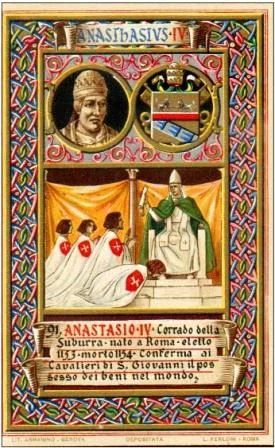
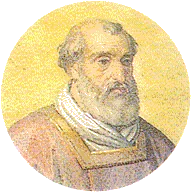 It was Pope Anastasius IV.179
(1153–1154),
who, in his bull " Christianae
fidei religio " , 180granted the Order the right to admit priests and to be completely independent of episcopal jurisdiction. This meant that from then on, the Order was directly subordinate to the Pope. Therefore, the Order members began to be divided into three classes: priests, knights, and "serving brothers."
Image181
Anastasius, Bishop and Servant of the Lord, to his beloved son Raymond, Rector of the Hospital in Jerusalem, and to his brothers, present and future, who forever receive spiritual life, health, and the papal blessing. The Christian Church firmly believes and sincerely professes that Jesus Christ, our Lord, though rich in all things, became poor for our sake. Therefore, he promises those who follow him the reward of consolation: “Blessed are the poor, for theirs is the kingdom of heaven.” Like the Father of the Orphans and the Savior of the Poor, who exhorts us to hospitality and generosity, the Gospel says: “Whatever you did for one of the brothers and sisters of mine last over, you did for me.” And to further demonstrate the perfection of this virtue, he assures us that he will even reward us for a cup of cold water. We, however, whose duty it is to extend fatherly care to people near and far, accept you in your devotion and grant you our favour in whatever you ask of us. And following the example of our predecessors—Innocent, Celestine, Lucius, Eugenius, and all the Roman Popes of blessed memory—we accept the protection of Saint Peter of the Hospital and refuge in the holy city of Jerusalem, and we protect all property with the privileges of the Holy See. We decree that all goods and possessions acquired by the Hospital to support the needs of pilgrims and the poor in the parishes of the churches of Jerusalem or other churches, or acquired for the careful care of the poor, or donated by anyone, as well as future gifts from kings and princes granted by the grace of God, or goods acquired in any other way; whatever the venerable brothers of the See of Jerusalem have lawfully donated to the priests of the Church for you or your successors, as well as for the brothers who care for pilgrims, We decree that all this (property) be peacefully and completely assigned to the Order. Should a plot of land have been granted to the Holy House for the glory of God, you may erect buildings there, build churches, and establish cemeteries according to the needs of the people living there, until nearby abbeys can assume this responsibility. Once the lands granted to you have been lawfully distributed, you may found chapels and establish cemeteries there to meet the needs of pilgrims and the brothers who dine at your table. We further decree that the successors of your brotherhood, without prejudice to the Masters, shall remain under Our protection and that of Saint Peter, and wherever they travel on earth, they shall bring peace. We have also decreed that anyone who has joined your brotherhood, in the event that the church to which he belongs is forbidden to conduct religious services, and in the event of his death, may not be denied a church burial until he has been excommunicated by name. If one of the brothers you send to receive the aforementioned brotherhood or council arrives in a town or village where religious services are forbidden and that place does not deserve the glory of Almighty God, the church must be opened once a year after the brothers' safe arrival. If the excommunicated turn away, the service must be held. And until all your wealth has been spent on supporting pilgrims and the poor, or on other purposes, We decree that no layperson or clergyman should even consider extorting church tithes or reaping the fruits of your labour. We decree that even bishops will not be permitted to impose interdicts, suspensions, or excommunications against the churches entrusted to you. However, should a general interdict be imposed on these places, services may be held discreetly, behind closed doors and without the ringing of bells, until the church in question is explicitly excommunicated. So that you may not lack the fullness of salvation and care for your souls, and so that the sacraments of the Church and divine services may be easily organized for you and the poor of Christ, We decree that you may receive clergy and priests , regardless of their origin, provided you can prove their purity and spiritual rank and obtain further information about them through letters and corroborating testimonies. You may keep them both in your principal institutions and in other necessary establishments, as long as they are not bound to any districts or dioceses and do not intend to harm the ministry of the Order. And should the bishop refuse to assign you a priest, you nevertheless have the right to accept and retain him, irrespective of the authority of the Holy Roman Church. These ministers may not be subject to anyone outside your order, except the Pope. We are also obliged to endow you with the authority to admit free lay people into your Society for the Poor without objection. We forbid you to return to the world your brothers who have joined your society, been received into it, taken vows, and donned the religious habit. It would be wrong for someone, after taking vows, finding the Cross of the Most High, and donning the religious habit, to abandon it. And no one should move into a large or small monastery without the prior consent of the brothers or the abbot of that monastery. If the brothers do not wish to accept him, the brother should not move, even if he has received permission to do so. Neither a layman nor a clergyman should grant the authority to accept or retain brothers. The consecration of altars or basilicas (a basilica is a medieval Christian church, usually cruciform – translator's note), the ordination of priests who have been transferred to the holy state, and other ecclesiastical sacraments are the responsibility of the bishop of the diocese. Provided, of course, that he is Catholic, shares the views of the Apostolic See, and is well-disposed toward it, he must grant you the sacraments described without objection. Otherwise, you are free, at your own discretion, to request the fulfilment of your request from another Catholic bishop who is irrefutably supported by our authority. And in the event of the death of the leader and director, no one shall assume this office through deceit, trickery, or violence, but only someone chosen by the brothers according to God's will. Furthermore, we guarantee you the offices and property here and overseas, in Asia and Europe, which the hospital lawfully possesses or can lawfully acquire, so that progress may be made in the hospital's operations through your efforts. No one shall be so foolish as to disrupt the aforementioned work, seize hospital property, or retain stolen property from the hospitals in order to weaken or disrupt them by force. And everything given for you and in your support shall be preserved intact and secure, and everything shall continue to be given to you in the future for any purpose whatsoever, with due respect to the authority of the Apostolic See and the ecclesiastical justice of the Bishop of the diocese. And whoever in the future, whether clergy or laity, knows this law of ours and, after the third admonition, recklessly attempts to violate it, shall, until he has fully made amends, be removed from his power and office and deprived of all self-respect. He shall know that he is subject to divine justice for the crime committed, and he shall be excommunicated from the holy body and blood of our Lord, God, and Savior Jesus Christ and ultimately subject to personal vengeance. But may the peace of our Lord Jesus Christ be granted to all who keep this law when they reap the fruits of their good deeds, and may they be granted eternal peace at the heavenly judgment. Amen, amen, amen. Given in the Lateran by Roland, Priest of the Holy Roman Church, to the Chancellor, on October 21, in the third proclamation, in the year 1154 after the Resurrection of our Lord, in the second year of the pontificate of Pope |
|---|
Raimund du Puy182
The first settlements and commanderies were established in the second half of the 12th century as a result of donations to the Order after the end of the Second Crusade (1147-1149), in which a large number of German princes and knights had participated, out of gratitude because many had been nursed back to health by the Knights Hospitaller/Maltese after being sick or wounded.
The first German religious order in Duisburg /Rhineland was first documented183
1156 the first in Austria in Mailberg184.
In 1156, Emperor Frederick I Barbarossa confirmed the Order's legacies.
all possessions in Austria and throughout the German Reich.
The first community in Bohemia (now the Czech Republic) followed in 1158 in Prague185.
In 1160 the order received the church and estate in Werben186 on the Elbe in Germany as a gift, which became the mother house of the Bailiwick of Brandenburg.
In 1165 the order arrived in Antworskov187 in Denmark.
At the same time, the communities of Esztergom (Hungary) and Poznań188(Poland) are mentioned.

Raymond also introduced the Order's Great Seal, the lead bulla, which, with some modifications, remained in use from the 12th century until 1798. Until 1278, when Nicholas de Lorgne introduced a separate Conventual Bulla, there was no distinction between the Grandmaster's seal and that of the Order. The general design of the seal depicted, on the obverse, the Grandmaster kneeling in prayer before the Patriarchal Cross. This image was usually accompanied by the sacred letters Alpha and Omega, alluding to the Second Coming of Christ. The central image was surrounded by a legend bearing the Master's name, followed by the official inscription CVSTOS.190

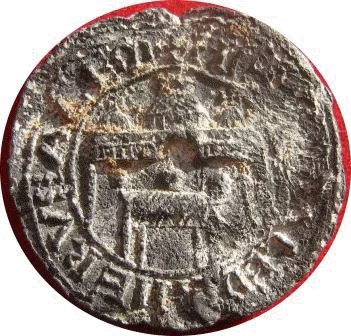
Lead seal by Raimund du Puy191
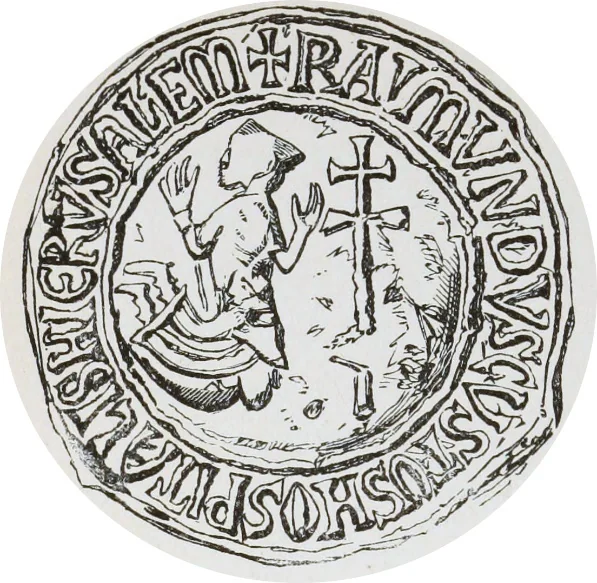

The seal of Raymond of the Puy. It was found beneath the walls of Norwich Castle. On the obverse, the Custos kneels before a patriarchal cross; the inscription reads "+ Raymond of the Custos of the Hospital of Jerusalem." The reverse depicts a church with three domes, undoubtedly representing the Church of the Holy Sepulchre. The lower half shows the interior with the tomb of Jesus. At the top is a cross, above it a lamp, and at the bottom, presumably, a swinging censer. The inscription reads "+ Hospital of Jerusalem." The "three domes" are actually a simplified representation of Jerusalem from the seal of the Kingdom of Jerusalem; they represent the Dome of the Rock, the Church of the Holy Sepulchre, and the Tower of David.192
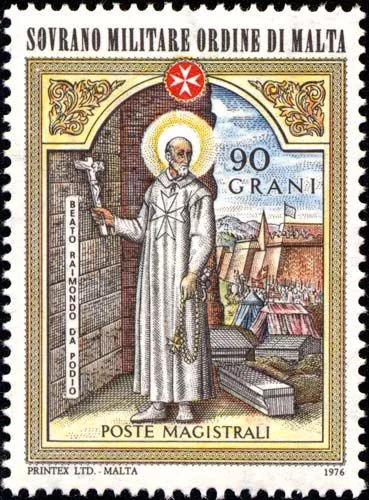
 When Raymond du Puy died in 1160, he was over eighty years old.
Once again it is René Aubert de Vertôt194,
praising him with these words:
“The Hospitallers and all the Latin Christians of the East who witnessed his virtues venerated him as one of the blessed even before his canonization, a title that was confirmed by posterity.”195

Raimund du Puy196