5. Further Development
of the Order of St. John in Jerusalem
a. Grandmaster Frà Auger de Balben
(1160 – 1162)


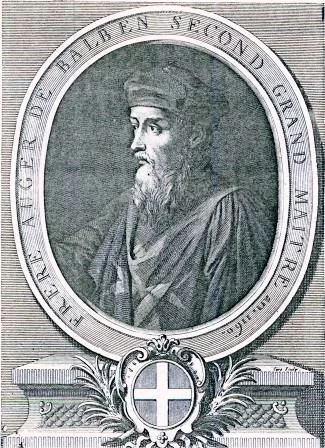

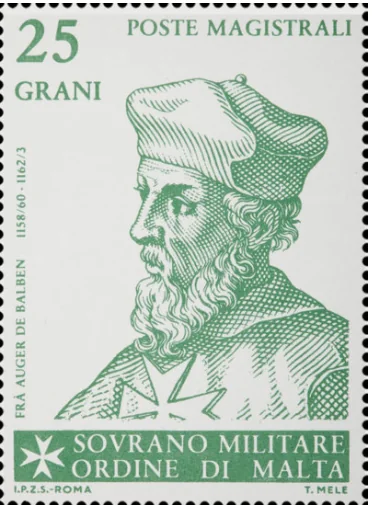
After the death of Raimund du Puy, Frà Auger de Balben (also referred to in the sources as Otogerius , Augerius Balbensis or Rogerus Balben) was elected as his successor by acclamation by the entire General Chapter of the Order.
He presumably came from the tongue of Provence and, like his direct successor, was an experienced French knight from the Dauphiné.
 Pope Alexander III receives an envoy201 |
|---|
 Frà Auger de Balben was extremely successful as a peacemaker in both church and state during his short time in office. His historical merits lie primarily in two diplomatic achievements:
1. Church unity : He united the clergy in Palestine in support of
Pope Alexander III202 against the antipope Victor IV (Octavian) in 1825 , thus securing the loyalty of the Crusader states to the legitimate pontiff.
2. State diplomacy : After the childless death of King Baldwin III, he prevented a threatened civil war through his intervention. He stabilized the succession for Baldwin's brother, Amalric I, against the resistance of other claimants to the throne.
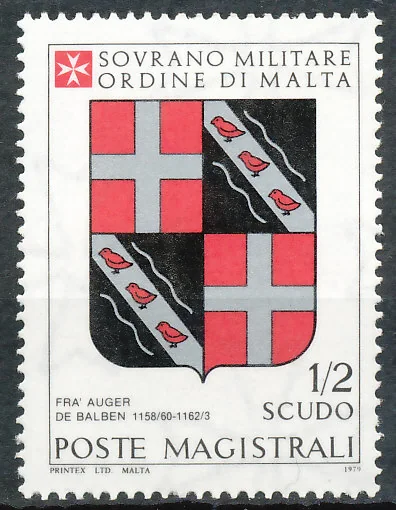 The reign of Frà Auger de Balben and his two immediate successors (the period between 1160 and 1170) also saw the significant expansion of the Order in Spain .
Frà Auger de Balben died in Jerusalem in 1162 and was buried there. His successor as Grandmaster was Arnaud de Comps .
Image203
b. Grandmaster Frà Arnaud de Comps
(1162 – 1163)


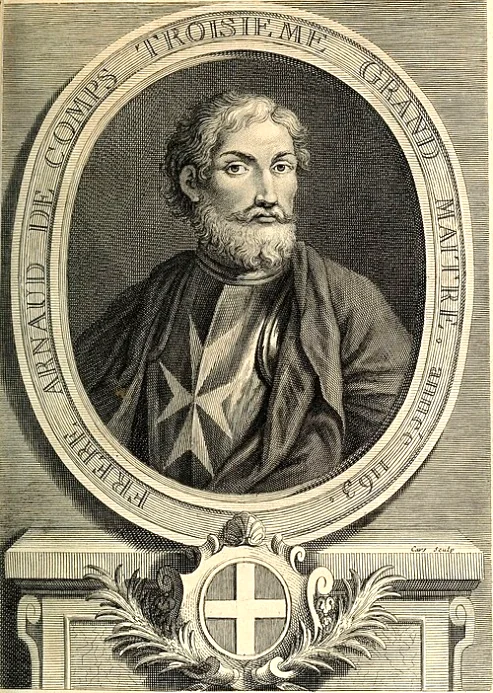

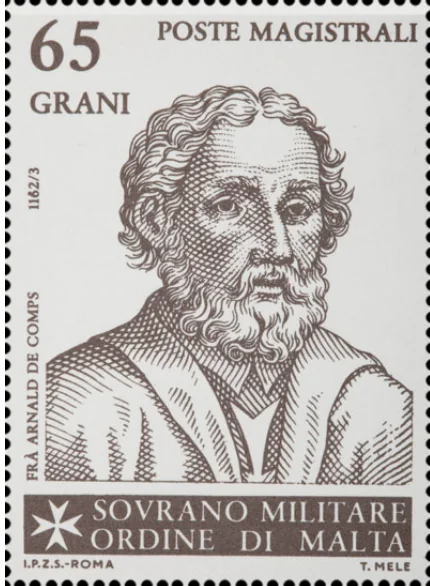
After the death of Auger de Balben in 1162, Frà Arnaud de Comps (also referred to in the sources as Arnaldo , Arnoldus Compensis or Arnoldus Compeniensis) was elected as the fourth Grandmaster of the Order of the Hospital of St. John in Jerusalem.
Origin and Election:
Arnaud came from the distinguished noble family of Comps -sur - Artuby , which wielded considerable influence in Provence and the Dauphiné. Like his predecessor, Arnaud was already of advanced age when he assumed the highest office of the Order. His election underscores the prevailing tendency of the Order's Chapter at that time to appoint experienced and proven knights from the French heartland to its leadership.
Term of Office and Impact:
Due to his short reign, Arnaud de Comps had little opportunity for far-reaching structural reforms within the Order. Nevertheless, he set strategic priorities in defense policy:
Securing the borders: Under his leadership, the presence of the Knights Hospitaller in the vulnerable border regions of the Kingdom of Jerusalem was strengthened.
Defense against the Saracens: He placed particular emphasis on protecting the outposts, which were regularly targeted by Saracen raids.
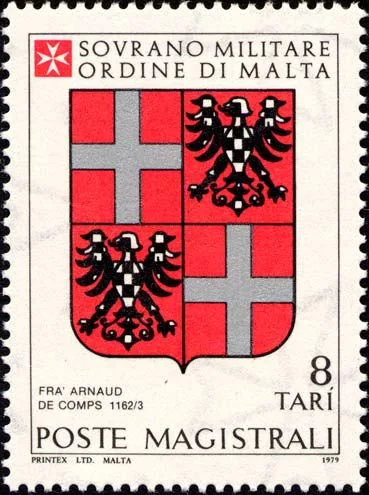 Death and Succession:
The sources regarding his date of death vary slightly; however, he died shortly after assuming office in208, at the latest in January 1163 (some sources cite January 1164)209. Despite the brevity of his term, he is listed in the official numbering as the fourth Grandmaster. His successor was Gilbert d'Assailly.
Image210
c. Grandmaster Frà Gilbert d'Assaily
(1163 – 1170)

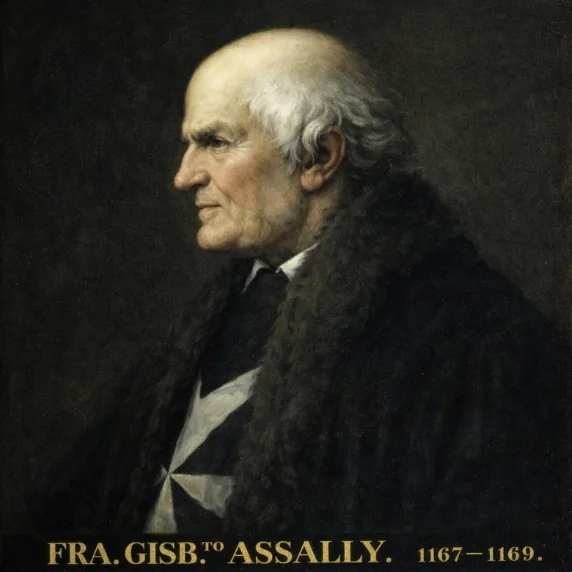

Origin and Rise:
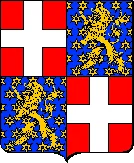
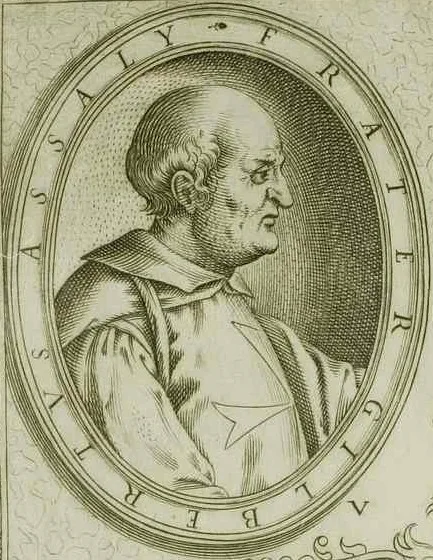
Frà Gilbert d'Assailly (also d'Assalit , d'Assilan , or in Latin Gilbertus Assaliensis) was elected the fifth Grandmaster of the Order in 1163. He came from a distinguished noble family in Languedoc . He had already served as one of the Order's stewards in Syria since 1146 and possessed extensive experience in the Levant. Some sources mistakenly identify him as a native of Tyre (from Tyre), but this is likely due to his decades of service in the East.
The militarization of the Order:
Gilbert is considered the first of the great "military masters." Under his leadership, the transformation of the hospital into a knightly order progressed so rapidly that the Order of St. John was militarily on par with the Templars within a few years. To secure the borders of the Kingdom of Jerusalem, the Order, under his leadership, acquired strategically important fortresses, including...

the castle Belvoir215(Kawkab al-Hawa) in 1168 and the stronghold Bet She'an .
The Egyptian Campaign and the Financial Debacle:
As a close ally of King Amalric I of Jerusalem, Gilbert supported the king's ambitions to conquer Egypt. In 1168, he led the Teutonic Knights' troops in the capture of the city of Pelusium. However, the campaign ended in a catastrophic failure in 1169. Besides the loss of prestige, the undertaking left the Order in a precarious financial situation: Gilbert had borrowed enormous sums to finance the campaign (sources mention up to 200,000 ducats216), which brought the Order to the brink of ruin. This pressure finally forced him to resign in 1170 (some sources cite 1169).
Contrasting Perspectives: Giacomo Bosio
While many historians critically assess Gilbert's tenure due to the indebtedness, the Order's chronicler Giacomo Bosio paints a considerably more positive picture in217. Bosio emphasizes Gilbert's spiritual rigor and interprets the acquisition of fortresses like Belvoir as a far-sighted strategy that ultimately enabled the survival of the Crusader states against Nur ad-Din. For Bosio, Gilbert's resignation was not merely a failure, but an act of humility to preserve the Order's internal peace.
 Image218
Tragic End:
After leaving office, Gilbert initially withdrew to France as a hermit. In 1183, he accepted an invitation from the English king.
Henry II met a tragic end during the crossing to England: his ship sank in the English Channel off Dieppe , with Gilbert d'Assailly and the entire crew drowning in219.
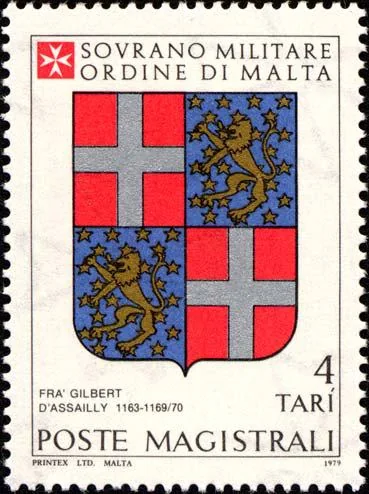
Summary
The era of Gilbert d'Assailly marks the definitive transition of the hospital from a purely charitable brotherhood to a
chivalric order of European stature.
Whether as a lavish visionary or as the strategic architect of the military power of the Order of St. John, he remains one of the most influential figures in its early history.
Image220
d. Grandmaster Frà Gaston de Murols
(1170 – 1172)


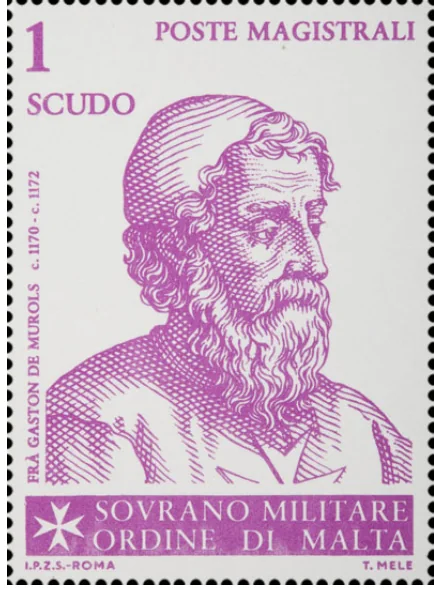

Following the forced resignation of Gilbert d'Assailly, Frà Gaston de Murols (also referred to in the sources as Castus , Casto , or Gastus) was elected the sixth Grandmaster in 1170.
Gaston came from a noble family in the Auvergne and had previously held the office of treasurer of the Order.
 Seal of Grandmaster Murols225 |
|---|
| And here, on the south side of the Church (of the Holy Sepulchre), stands the Church and Hospital of St. John the Baptist. No one can credibly tell another how beautiful its buildings are, how abundantly it is furnished with rooms, beds, and other supplies for the poor and sick, how rich it is in means to refresh the poor, and how devotedly it cares for the sustenance of the needy , unless he has the opportunity to see it with his own eyes. Indeed, we passed through this palace and could by no means ascertain how many sick lay there; but we saw that the beds numbered over a thousand. Not every one of the most powerful kings and despots could provide for as many people as this house provides for daily.226 | 227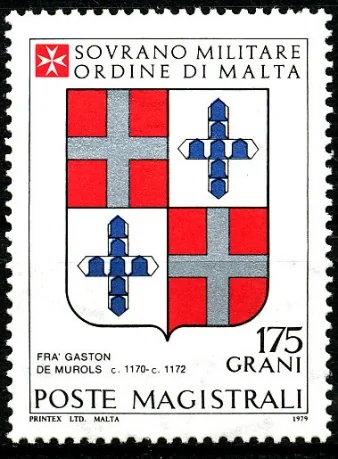 |
|---|
His election took place during a turbulent period and was initially recognized only by a portion of the Knights Hospitaller. A faction of dissenters instead aligned themselves with the authority of a certain Rostang . This schism, however, had no lasting consequences, as Gaston died in 1172.228 Due to his short reign, he was unable to implement any significant reforms within the Order of St. John.
A significant account from his time in office comes from the pilgrim Theoderich von Würzburg229, who visited the hospital in Jerusalem in 1172230. In his travelogue, he describes the institution as a magnificent palace with over a thousand beds, whose dedication to caring for the sick and poor surpassed even the capabilities of powerful kings.
The pilgrim “Theoderich” from Würzburg231reports in 1172 in his “Guide to the Holy Land” in Part I, Chapter XIII, about the Hospital of St. John the Baptist in Jerusalem:
e. Grandmaster Frà Jobert of Syria
(1172 – 1177)232


After Gaston's death, Frà Jobert (also Joubert or Josberto) was elected the seventh Grandmaster. His epithet "of Syria" indicates that he was born in the Levant, which gave him a particular familiarity with the local political situation.
He is considered one of the most far-sighted reformers in the early days of the Order of St. John. His work marks the transition from an improvised brotherhood to a tightly organized, financially stable, and spiritually sound institution.
The architect of inner order
Jobert took over the leadership of the Order during a period of deep crisis. His predecessor, Gilbert d'Aissailly , had nearly ruined the Order through costly military expeditions. Jobert proved to be a prudent administrator who consolidated the finances without neglecting the Order's core mission. He is credited with introducing the principle of frugality to ensure the long-term sustainability of its charitable work.
Charitable reforms and statutes
Jobert gained particular historical significance through the further development of the order's own statutes, which emphasized service to one's neighbour:
The privilege of white bread : In the General Chapter of 1176, it was stipulated that patients in the hospital were entitled to high-quality white bread. To ensure production, specific lands (casales) were allocated to the order.
Religious life: The General Chapter of 1177 issued the “Customs of the Church of the Hospital”, which specified the religious conduct of the brothers and the commemoration of the deceased.
Statesman and confidant of kings
Jobert enjoyed the highest esteem in the Kingdom of Jerusalem. His integrity was so great that in 1171, even before his election as Grandmaster, King Amalric I appointed him guardian of his son, the future King Baldwin IV, and entrusted him with the affairs of state during his absence.
Strategic Diplomacy in the Holy Land
Militarily, Jobert acted cautiously and strategically. He refused to involve the Order in risky expeditions like the attack on Egypt (1174) when the chances of success were slim. Instead, he concentrated on defending the empire and freeing prisoners, such as Raymond III of Tripoli, for whose release he campaigned vigorously.
Military expansion
, the Order acquired the strategically important castle of Margat (Qalʿat al - Marqab). The Order of St. John expanded it into such a massive fortress that Saladin refrained from a direct attack.

Stamps of the Order of Malta dated February 26, 1990,237: The fortress of Margat, after an old copper engraving. It was a stronghold of the Order of St. John in the Holy Land and became its headquarters after the fall of Jerusalem (1190). Sheet: Same motif as the series, with a knight figure on the left and Blessed Raymond on the right.
 The fortress of Margat today238
Jobert of Syria was not a conqueror in the classical sense, but rather the architect of the Order's foundations . He saved the Knights Hospitaller from bankruptcy and gave them the legal and moral basis on which they could survive for centuries.
Jobert of Syria died in October 1177.
"The Order of St. John bid farewell to a man who not only administered the Order's heritage but also strengthened it at its very core. Jobert of Syria was the guiding hand in a time of upheaval."
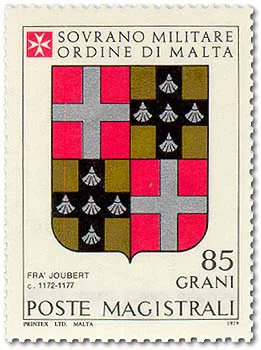 His life's work was the unity of spirit and action: with wisdom and discipline, he restored the Order's finances, yet his heart always beat for the most vulnerable. His concern that the bread of the poor must never disappear remains unforgettable—a promise he enshrined in stone and law. As guardian of the liturgy, he gave the Order its spiritual home; as a statesman, he earned the trust of kings. He left behind an Order steadfast in faith and unwavering in its service to others. His legacy is our mission .239
His successor was Roger de Moulins .
Image240
f. Grandmaster
Frà Roger de Moulins
(1177 – 1187)
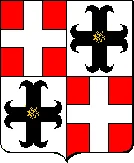
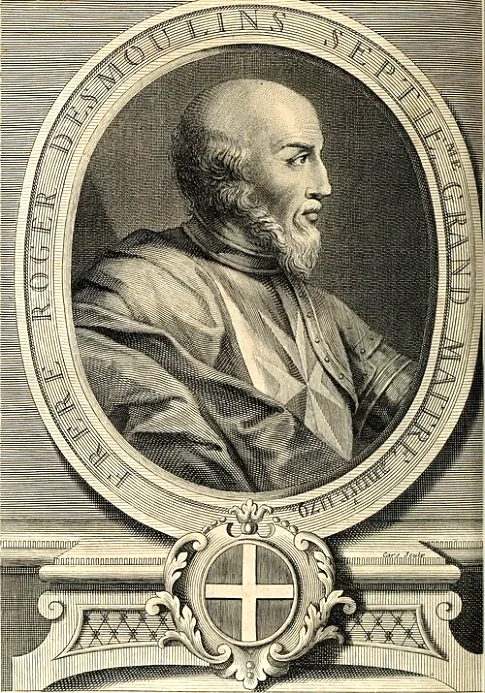


After Jobert's death, Frà Roger de Moulins (also Desmoulins or Rugerio Moulins), another experienced Norman knight, was elected as the eighth Grandmaster. His term of office marks the final transformation of the Hospital into a military order of knights, but also the painful loss of Jerusalem.
Between military duty and hospital tradition
Under Roger's leadership, the militarization of the order increased to such an extent that
Pope Alexander III245 issued the bull
“Piam admodum" between 1178 and 1180.
In it, he admonished the Grandmaster…
| …to preserve with all his might the sacred customs and traditions of his deceased predecessor… The brothers shall only take up their weapons when a general call is made for the defense of the country or for the siege of an infidel's castle under the sign of the cross. This shall in no way diminish their care for the poor. 246 |
|---|

Emperor Frederick Barbarossa
submits to Pope Alexander III in Venice in 1177.247
Holy Roman Emperor 1155–1190248 Image249 Emperor Frederick I Barbarossa played a crucial role in the legal and financial consolidation of the Order of St. John in the Holy Roman Empire. His connection to the order can be divided into the following points:
Image250
In summary, Barbarossa elevated the Order from a purely charitable brotherhood in the Holy Land to a privileged and protected institution within the European power structure. In 1188 he decided to lead the Third Crusade, but drowned in the Saleph River (now the Göksu) near Silifke in present-day Turkey before reaching Palestine.251
|
|---|
 Excursus
 De facto imperial status (1185):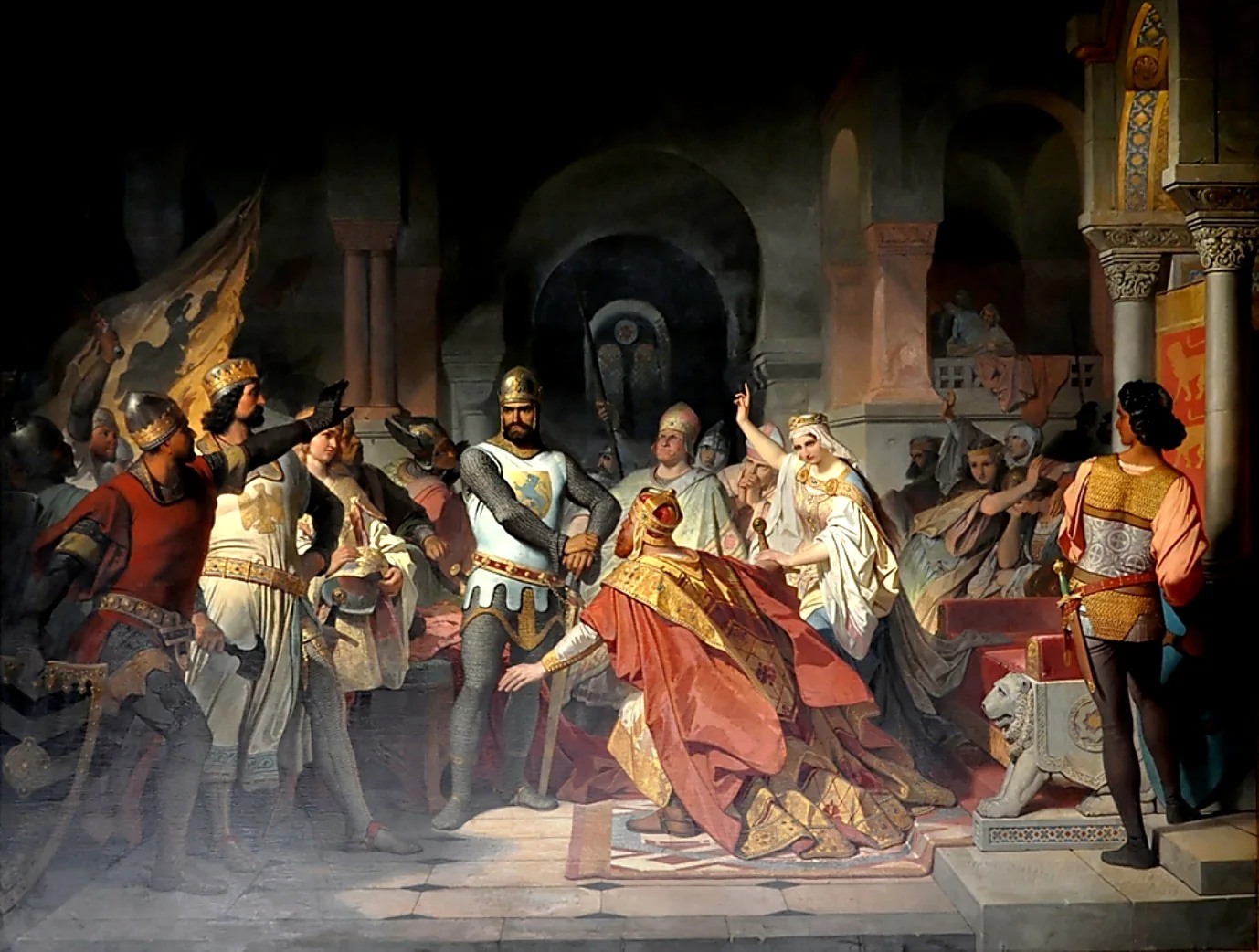
The statutes of 1182: A legal turning point
On March 14, 1182, the General Chapter under Roger de Moulins issued new statutes that formally established the Order as a religious-military order :
Medical innovation: For the first time, permanently employed doctors and surgeons were included in the staff of the order.
Military anchoring: The “brothers in arms” were first explicitly mentioned in a normative text.
Charitable codification: The statutes obligated the order to provide daily care for thirty poor people, weekly alms, and to take in pregnant women and orphaned children.
Liturgy: It was established that the coffins of deceased brothers would be covered with a red cloth bearing a white cross – a symbol that has endured to this day.
Diplomacy and Expansion:
In 1184, Roger, along with Patriarch Heraclius and the Templar Grandmaster Arnold of Toroga , travelled through Europe to seek support for the beleaguered Kingdom of Jerusalem. During this time, he consolidated the Hospitallers' presence in England, France, and Germany. The papal bull Quanto per Gratian Dei (August 22, 1185) emphasized the order's status as a universal charitable institution.
 The Fall
and Battle of Hattin
The political situation became increasingly tense under the rule of Guy of Lusignan. Roger de Moulins fell on May 1, 1187, at the Battle of Cresson .253 , when he confronted a Muslim force under Saladin's son al-Afdal.
Shortly afterwards, on July 4, 1187, the Christian army was annihilated at the Battle of Hattin . Among the prisoners were 230 Hospitaller and Templar knights. Because they refused to renounce their faith, they suffered martyrdom on the slopes of the Horns of Hattin.
 The painting254depicts the King of the Kingdom of Jerusalem, Guy of Lusignan (reign 1186–1192), surrendering to Saladin after his defeat at the Battle of Hattin on July 4, 1187.
Saladin's victory at the Battle of Hattin was of crucial importance, as it led to the Muslim recapture of Jerusalem three months later.
The End
of the Jerusalem Era
After the fall of the Holy City on October 2, 1187, the Order had to leave Jerusalem.
The period of our study ends with Saladin's entry into Jerusalem
on October 2, 1187.
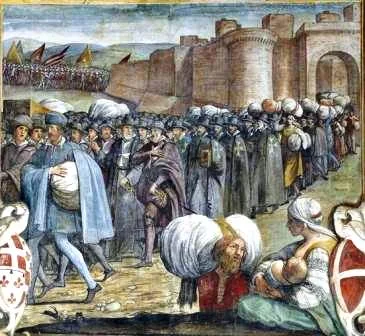 1187: Exodus of the Christians and the Order of St. John from Jerusalem (fresco in the Grandmaster's Palace in Valletta)255
Saladin, who respected the charitable work of the Order of St. John, allowed them to continue operating the hospital for another year. The hospital grounds have since been known as Muristan (Kurdish/Persian for "hospital"). The order initially relocated its headquarters to Margat . Thus ended the first glorious chapter of the Order of St. John in its founding city.
The ruins of Santa Maria Latina in Jerusalem
were silent witnesses to this era for a long time.

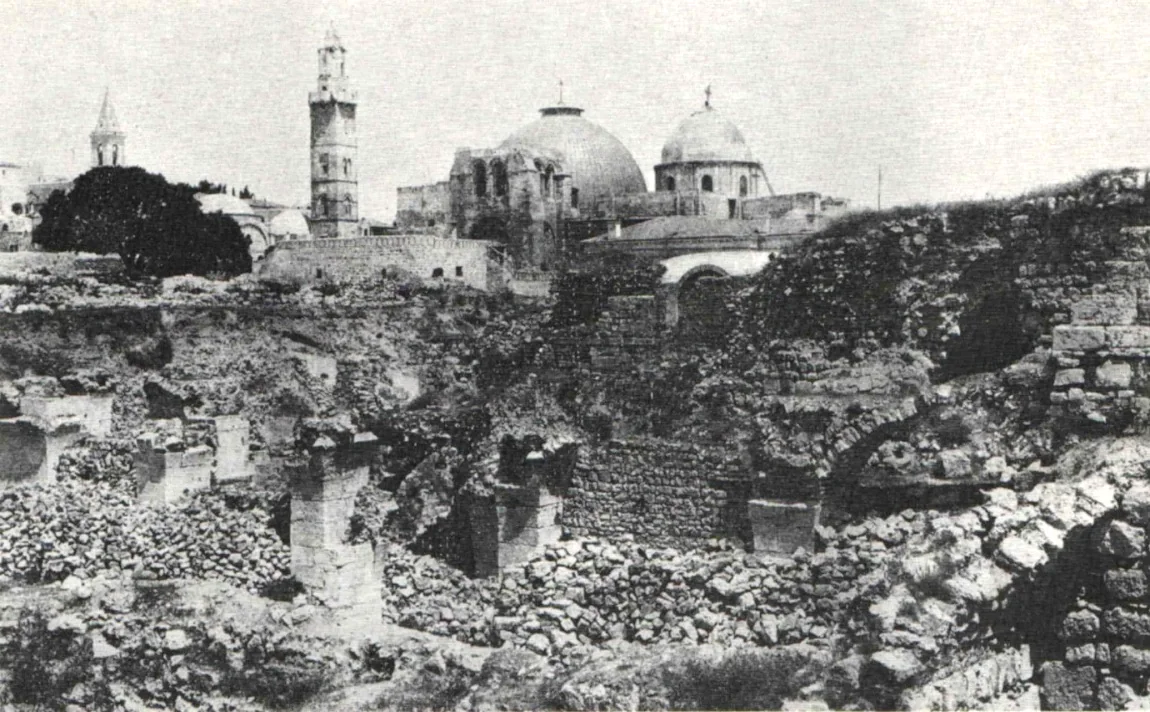
The hospital was later destroyed. Only a few ruins of Santa Maria
Latina remained as sad witnesses to a grand past.

The official homepage of the Order of Malta reported on August 13, 2013, page258:
Remnants of the Order of St. John first hospital
come to light in Jerusalem
A recent finding in the Old City of Jerusalem has unearthed the ruins of what is now considered to be the Order of St. John’s first hospital, dating back more than 900 years.
“This was where the members of the St. John’s Hospital order lived. This is where it started. This was the first place where they used an ambulatory service to bring in sick and wounded people to the hospital. They had riders on camels and horses” said Amit Re’em, excavation co-director for the Israel Antiquities Authority. The hospital is the largest of its era to be discovered in the Middle East region.
The important analysis carried out has revealed details of the probable size of the building, a busy hospital dating back to the period between 1099 and 1291. The building is situated in the heart of the Christian Quarter in the Old City of Jerusalem, near its principal road, King David Street.
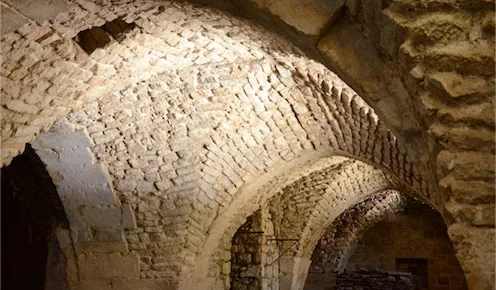 The works, authorized by the Israel Antiquities Authority, expose parts of a structure which seems to extend across a large area. It is more than six meters high and reveals a great hall composed of pillars and ribbed vaults, rooms and smaller halls.
Contemporary historical documents, most of which are in Latin, mention a sophisticated hospital that was as large and as organized as a modern hospital. The Israeli Authority, in presenting the exciting findings, commented that: “The hospital was established and constructed by the Order of St. John of the Hospital in Jerusalem and known by its Latin name the Hospitallers (from the word hospital). They took an oath to care for and watch over pilgrims, and when necessary they joined the ranks of the fighters as an elite protective unit.”
The creation of a tradition: care for all
The findings and the early sources provide considerable detail, much of which we already know: the hospital was dedicated to John the Baptist, and treated people of all faiths passing through Jerusalem. It had different wings and departments depending on the nature of the illness and the condition of the patient – similar to the arrangements in a modern hospital. In an emergency the hospital could accept as many as 2.000 patients. Our Hospitallers treated sick men and women of different religions with respect, no matter who they were nor from where they came from. The Muslim Arab population was pivotal in assisting the knights of St. John in establishing the hospital and teaching them medical science. Arab culture has always held the medical profession in high regard and Arab physicians were famous far and wide.
The sources also note that, in addition to the medical departments, the hospital also functioned as an orphanage where abandoned newborns were brought.
The edifice collapses in the 15th century
In the Middle Ages parts of the structure were used as a stable and the bones of horses and camels have been found in the excavations, alongside a great deal of metal used for shoeing the animals. In 1457, the building collapsed in an earthquake and was buried.
 The archeological project was prompted by a planning permission request by the Grand Bazaar Company of East Jerusalem to create a restaurant. They worked in cooperation with the Israel Antiquities Authority to carry out the excavations prior to the start of the new works. Building project manager Monser Shwieki said developers intend to incorporate the building into the planned restaurant. The site will be open to the public sometime in 2014.
[Photograph credit: Yoli Shwartz, courtesy of the Israel Antiquities Authority.]
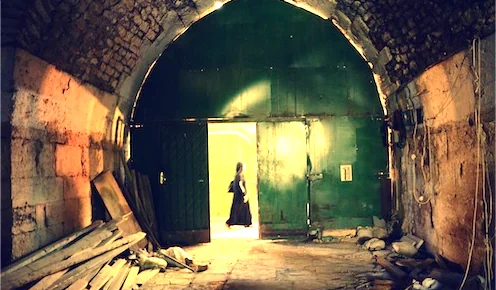
An interesting video about this is available online at:
https://cmc-terrasanta.com/en/media/news/4830/the-crusader-hospital

 Inspired by these images of the excavated part of the hospital, Christopher Santner created this image depicting Blessed Gérard in the Hospital of Jerusalem259.
 A postage stamp issued by Monaco to commemorate the 900th anniversary of the Order of Malta
in 1999. Blessed Gérard is depicted on the left .
Blessed Gérard
In the hospital.
Painting in the embassy of the Order of Malta
in Valletta / Malta 260.